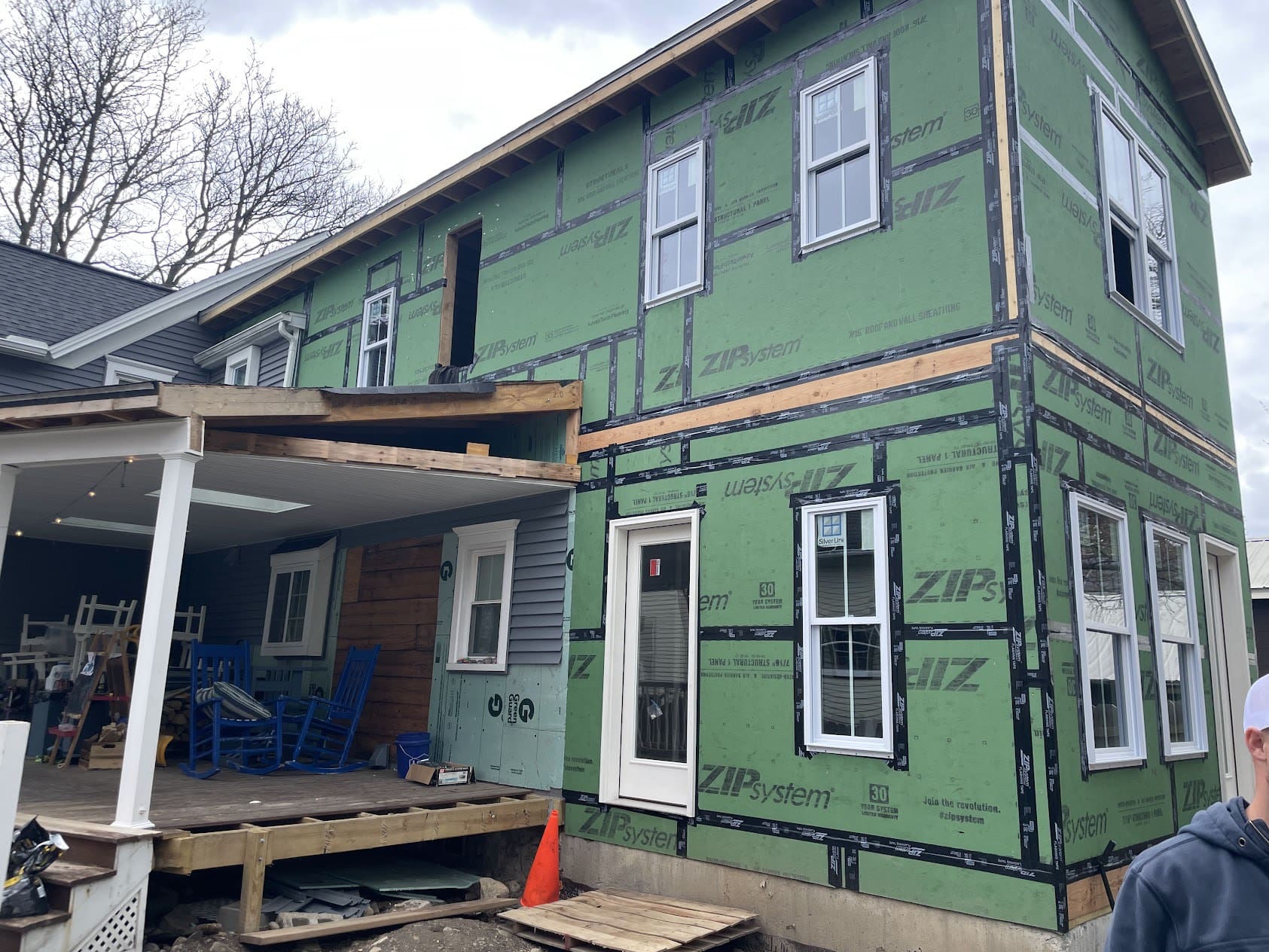
Soffit & Fascia: Why Proper Ventilation Matters for WNY Roofs

Most Buffalo homeowners don’t think about their soffit and fascia until something is visibly wrong. By then, damage has usually already worked its way into the roof structure behind them. These two components are among the most overlooked parts of the exterior system, yet they play a direct role in preventing ice dams, controlling attic moisture, and keeping gutters anchored through a WNY winter.
At All Access Builders, our team addresses soffit and fascia as part of a complete roofing system, not as an afterthought. This guide explains what they do, what failure looks like, and what replacement costs in the Buffalo market.
What Are Soffit and Fascia?
These two terms describe different components of the roof overhang, and each serves a distinct purpose.
Soffit is the finished surface on the underside of your roof’s overhang, the section between the exterior wall and the roof edge. On most homes, soffit panels are perforated or vented to allow outside air to flow into the attic space. That airflow is a critical part of the attic ventilation system.
Fascia is the vertical board that runs along the outer edge of the roof, directly behind the gutters. It serves as the mounting surface for your gutter system and gives the roofline a clean, finished appearance. It also seals the gap between the roof edge and the soffit below, keeping pests and moisture from entering the roof assembly.
Together, soffit and fascia form the perimeter of your roof system. When either component is compromised, the consequences reach well beyond the overhang itself.
How Soffit Ventilation Protects Buffalo Roofs
Attic ventilation is one of the most important factors in preventing the ice dams and moisture buildup that cause roof damage in Western New York. The soffit is where that ventilation system starts.
In a properly functioning system, cold outside air enters through the perforated soffit vents at the low point of the roof. That air travels up through rafter channels toward the ridge and exits through ridge vents at the roof peak. This continuous airflow keeps the attic temperature close to outdoor ambient in winter, which means the roof deck stays uniformly cold and doesn’t create the warm zones that melt snow and trigger ice dam formation.
The U.S. Department of Energy’s guidance on durable attics identifies moisture and inadequate ventilation as the two primary threats to attic durability. Blocked or damaged soffit vents cut off the intake side of that system entirely. The result is a warm, moisture-laden attic that degrades insulation, accelerates shingle wear, and creates ideal conditions for ice dam formation along the eaves. Ourroofing team evaluates soffit vent coverage on every roof assessment because the ventilation system and the roofing system are inseparable in terms of performance.
Signs Your Soffit or Fascia Needs Replacement
Catching deterioration early limits how far the damage spreads. Here’s what to look for on an exterior walk-around:
- Rotting or soft wood on the fascia board, especially directly behind gutter hangers where water wicks into the wood after overflow
- Peeling paint on soffit or fascia surfaces, indicating moisture is cycling through from behind rather than just from weather exposure
- Pest entry points including holes, gaps, or insect tunneling on the soffit underside, particularly on older wood-framed homes
- Gutters pulling away from the fascia, indicating the board has rotted behind the mounting point and can no longer hold hardware
- Blocked or missing vent openings on the soffit from paint-over, debris buildup, or damaged panels
Any of these signs warrants a closer look. Our soffit installation team assesses the full overhang condition during exterior inspections and can advise on whether repair or full replacement is the right call.
Vinyl vs. Aluminum Soffit for Buffalo Winters
Two materials dominate soffit replacement in the WNY market, and both outperform the original wood construction found on most older Buffalo homes.
Vinyl soffit is the most common choice for residential replacements in Buffalo. It’s lightweight, resists moisture, doesn’t rot, requires no painting, and handles the freeze-thaw cycle without deteriorating the way wood does over time. It’s also the lower-cost option of the two.
Aluminum soffit is a step up in durability and rigidity. It holds its shape better under impact from ice and debris and has a longer effective lifespan in harsh conditions, at a modestly higher price point. Either option dramatically outperforms the painted wood overhangs found on the majority of older Erie County homes.
For most Buffalo homeowners, vinyl is the practical choice given the performance-to-cost ratio. Aluminum makes sense where impact resistance is a higher priority or where consistency with existing aluminum trim and gutters matters.
How Damaged Fascia Leads to Costly Roof Problems
The consequences of failing fascia follow a predictable and expensive sequence. Understanding that the cascade is the strongest argument for addressing fascia damage early rather than deferring it.
Rotted fascia loses its structural integrity and can no longer hold gutter hangers securely. Gutters begin to pull away from the roofline under their own weight and the added load of water and ice. Once a section separates, water that should be channeled away from the home runs directly down the fascia, behind the gutter, and against the exterior wall and foundation.
Water running behind the fascia soaks into the roof deck edge and the wall framing below the overhang. Over repeated wetting and drying cycles through a Buffalo season, that moisture rots the roof decking from the edge inward. What started as a rotted fascia board became a roof deck repair, fascia replacement, and, in more advanced cases, framing work. Our fascia repair team regularly uncovers this cascade on homes that deferred attention for several seasons, and the repair scope is always larger than it would have been with early action.
Soffit & Fascia Replacement Cost in Buffalo
Replacement costs depend on linear footage, material choice, and whether the underlying wood framing or sheathing requires repair before new material goes up.
| Material | Cost per Linear Foot (Installed) | Typical Project Total (150 lin ft) |
| Vinyl Soffit | $6 – $12 | $900 – $1,800 |
| Aluminum Soffit | $10 – $18 | $1,500 – $2,700 |
| Fascia Board (vinyl-wrapped) | $8 – $15 | $1,200 – $2,250 |
Most Buffalo-area homes have between 100 and 200 linear feet of soffit and fascia combined. Homes with rotted wood behind the fascia will have additional framing repair costs, typically $3 to $6 per linear foot for sheathing or nailer board replacement. Our Buffalo construction services team provides itemized estimates so homeowners know exactly what each component of the project will cost before work begins.
Soffit and fascia replacement is most cost-effective when done alongside gutter replacement or a roofing project, since the labor overlap reduces overall cost and ensures all connected components are addressed together. For homeowners doing broader exterior or home remodeling work, bundling soffit and fascia into the project scope is always the most efficient approach. Learn more about our team’s work on our about page.
FAQs About Soffit and Fascia in Buffalo
How long does soffit and fascia last in WNY?
Vinyl and aluminum soffit and fascia typically last 20 to 40 years when properly installed. Wood soffit and fascia, which most pre-1990s homes have, shows significant deterioration within 15 to 25 years in WNY without consistent painting and sealing.
Is soffit and fascia replacement a DIY project?
Single-story soffit sections with safe ladder access are within reach for an experienced homeowner. Full replacement involving multiple stories, structural fascia repairs, or integrated gutter work should be handled by a licensed contractor to ensure vent placement and airflow requirements are met correctly.
Does soffit and fascia replacement require a permit in Buffalo?
In most cases, replacing soffit and fascia cladding does not require a permit in Buffalo. If the project involves structural repairs to the overhang framing, a permit may be required. Your contractor should confirm before work begins.
When is the best time to replace soffit and fascia in Buffalo?
Late spring through early fall is the optimal window for installation. That said, deteriorating components should be addressed before winter rather than waiting for ideal conditions, as another freeze-thaw season will compound the damage.
Does damaged soffit affect my roofing warranty?
It can. Many roofing manufacturers require adequate attic ventilation as a warranty condition. A blocked soffit vent system that restricts airflow can be cited if shingles fail prematurely, potentially voiding the claim.
Protect Your Roofline Before Problems Compound
Soffit fascia replacement in Buffalo is rarely urgent in the way a leaking roof is urgent, but the damage it allows when deferred follows a well-documented and expensive path. Keeping the overhang system in good condition protects your gutters, your roof deck edge, your attic ventilation, and your wall framing, all from a component that most homeowners walk past without a second look. All Access Builders handles soffit and fascia replacement as part of complete exterior projects and as standalone service. Schedule your free inspection or call us at (716) 770-6560 and we’ll assess the condition of your overhang system and give you a clear, itemized picture of what needs attention.
Related Post
Emergency Roof Repair in Buffalo: What to Do After a Storm
If your roof took damage in a Buffalo storm, act quickly but calmly. All Access [...]
Signs Your Buffalo Roof Needs Replacement (Not Just Repair)
Most homeowners want to believe a repair will solve the problem. It’s cheaper at the [...]